Biocontrol
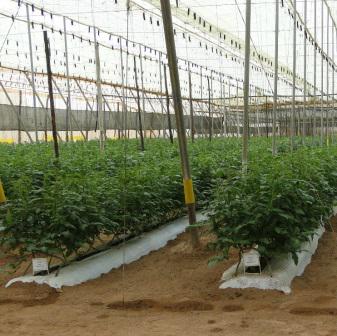 Biocontrol techniques use natural mechanisms to protect crops, reducing the use of phytosanitary products.
The appearance of resistance to the chemical products used in agriculture as well as health issues related to their massive use (environmental pollution, health scandals) have led to the development of alternative
control methodsto their use.
Biocontrol is based on managing the balance of aggressor populationsrather than on their eradication. It involves using populations of auxiliary agents or their products, to reduce the aggressor’s population below the threshold of its pest significance, below which the bioaggressor’s harmfulness does not justify economically the implementation of a treatment. Biocontrol products are classified into
4 families: macroorganisms (invertebrates, insects, mites or nematodes), microorganisms (fungi, bacteria, viruses), chemical mediators (pheromones, kairomones) and natural substances (of plant, animal or mineral origin). Biocontrol is used as part of an
integrated pest control programme, with the use of cultivation practices compatible with a non-chemical crop management. In general terms, another crop management strategy is implemented, and
prevention plays an important part.
No case of resistance to biopesticides has been reportedso far, although it is quite conceivable that pests develop resistance against their auxiliary predators if they are in contact repeatedly and for long periods of time. There are different types of biological control. The most widely used and the most well-known is
inundative control, whereby auxiliaries are industrially bred and reproduced, and are then repeatedly mass-released on the crop to be protected, like a chemical product. Auxiliaries are not persistent in the environment and the effect is only visible in the short term.
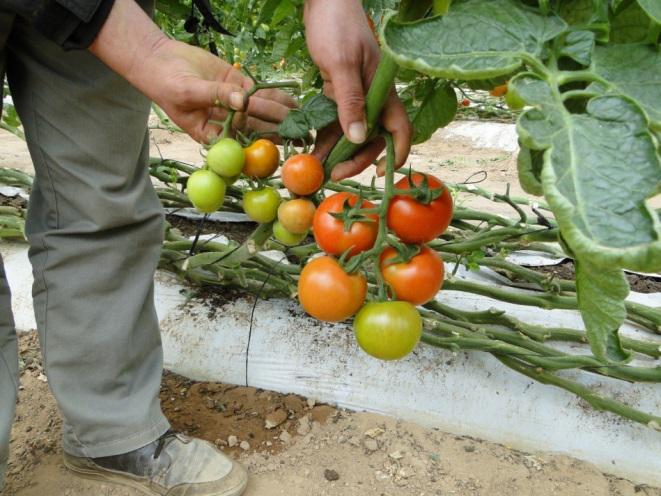 2 trusses of tomatoes: on the right the one treated by with a biopesticide, on the left the non-treated control on non-disinfected soil (Credits: M. Tranier)
, it is estimated at only USD 3 billion whereas that of chemical PPP (PhytoPharmaceutical products) represents 55 in 2016. However, it tends to have
an annual growth rate of about 8%and it is estimated at USD 4.5 billion in 2023.
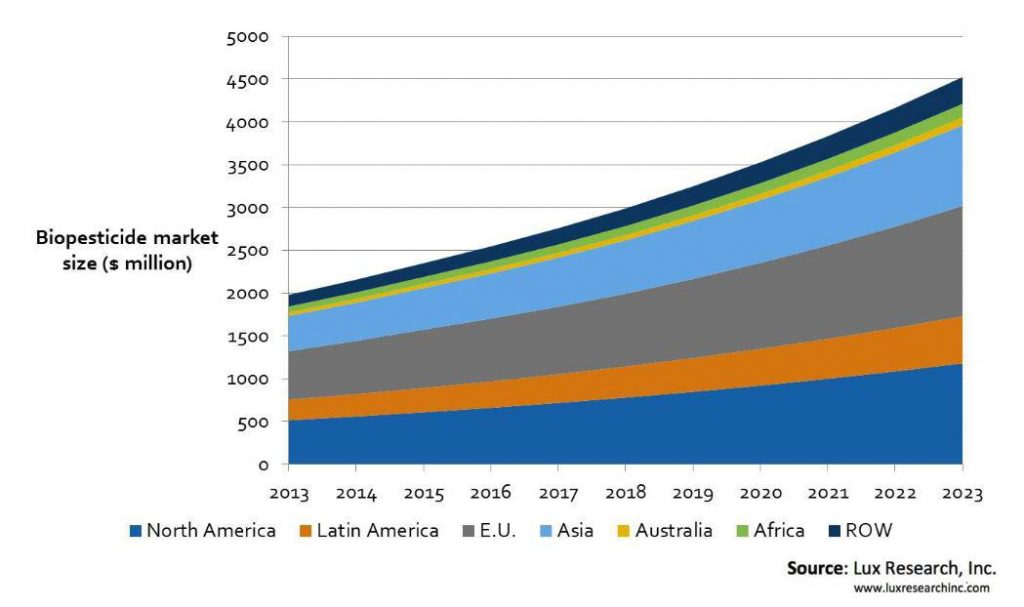 Fig 1: Evaluation of the biopesticide market and prospects (Olson S., 2015)
The biocontrol market players are mainly large groups, generally the same agrochemicals giants entering this sector in full expansion. They include Bayer (Monsanto), BASF, DuPont, etc. However, SMEs are entering this business whose outlook for development is promising (BIOTOP, GERME SA, IF TECH, JADE: subsidiary of the group ALIDAD INVEST, Vivagro).
In France, the government is committed to promoting the use of biocontrol through the
Ecophyto planlaid down at the Grenelles Environment Forum. The ultimate objective being the 50% decrease of chemical input use in the coming years. Furthermore, agro-ecology (including biocontrol) is encouraged by the state via its
Agriculture – Innovation 2025 plan.
More information
- http://agriculture.gouv.fr/quest-ce-que-le-biocontrole
- http://agriculture.gouv.fr/agriculture-innovation-2025-des-orientations-pour-une-agriculture-innovante-et-durable
- http://agriculture.gouv.fr/sites/minagri/files/151022_ecophyto.pdf
- Olson S. 2015. An alalysis of the biopesticide market now and where it is going. Outlooks on Pest Management. DOI: 10.1564/v26.