Separation, oxidation, hybrid processes for Environment
Its mission
- the development of sustainable processes based on membrane and chromatographic separation operations and oxidation,
- process eco-design
Key words
Membrane processes, Chromatographic processes, Ozonation processes, Eco-design, Environmental analysis, Waters, Recovery of biomolecules
Person in charge
Christelle Guigui– Professor INSA Toulouse
christelle.guigui@insa-toulouse.frTeam numbers in 2016: 24
Main activities
1. Developing knowledge on separation (membrane, adsorption, chromatography) and oxidation processes to identify the transfer-limiting phenomena. Attention is focused on the characterization and understanding of interactions between species (virus mimics, emerging micropollutants, proteins, salts, (nano)particles, etc.) at the separative and/or reactive separation interface using specific experimental or modelling tools. 2. Analyzing the functioning of these processes in the case of complex fluids (natural waters, effluents, biofluid, urine, green juices, etc.) in water reuse and material recovery (proteins, phosphates, etc.) branches as part of a sustainable development and public health initiative using specific experimental or modelling tools. 3. Designing and optimizing integrated and sustainable processes based on the hybridization of systems (membrane, (bio)reaction, adsorption, etc.) or the coupling of unitary operations in the field of water and bioprocesses. 4. Carrying out the environmental analysis (life cycle analysis) of processes, developing innovative and adaptive tools in the fields of multi-criteria optimization, environmental analysis, and process eco-design.
Fields of application and target products
- Production of drinking water / Desalination
- Domestic and industrial wastewater treatment
- Water reuse and removal of micropollutants (medicinal residues, pesticides, etc.) and viruses
- Water recycling in industry
- Development of methods for process eco-design (bioprocesses, drinking water production, wastewater, etc.) – Dynamic life cycle analysis (LCA)
Technologies, techniques, specific tools
- Environmental analysis software and integrated “modelling – LCA – multi-objective optimization” platforms.
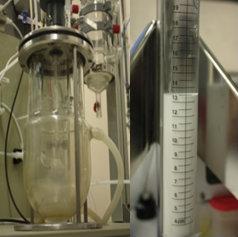
- Membrane filtration pilots and membrane contactor, ozonation and crystallization reactors, membrane bioreactor, chromatography pilot.
- Chemical and physico-chemical analyses in complex media.
- Reaction or separation carrier characterization tools.
Significant publications and patents
- C. Li, C. Cabassud, C. Guigui (2015), Effects of carbamazepine in peak injection on fouling propensity of activated sludge from a MBR treating municipal wastewater, Journal of Membrane Science, Volume 475, 1 February 2015, Pages 122-130
- M. Monnot, S. Laborie, C. Cabassud, 2016, Granular activated carbon filtration plus ultrafiltration as a pretreatment to seawater desalination lines: Impact on water quality and UF fouling, Desalination, 383, 1-11. doi:10.1016/j.desal.2015.12.010
- B. Bisinella de Faria, M. Spérandio, A. Ahmadi, L. Tiruta-Barna, Evaluation of new alternatives in wastewater treatment plants based on Dynamic Modelling and Life Cycle Assessment (DM-LCA), Water Research 84 (2015) 99-111
- L Tiruta-Barna, Y Pigné, T. Navarrete Gutiérrez, E. BenettoFramework and computational tool for the consideration of time dependency in Life Cycle Inventory: proof of concept, Journal of Cleaner Production, 116 (2016) 198-206
- Crousier, Claire; Pic, Jean-Stephane; Albet, Joel; Urban Wastewater Treatment by Catalytic Ozonation
- OZONE-SCIENCE & ENGINEERING Volume: 38 Issue: 1 Pages: 3-13 Published: JAN 2 2016
- P. Loulergue, M. Weckert, B. Reboul, C. Cabassud, W. Uhl, C. Guigui (2014) Mechanisms of action of particles used for fouling mitigation in membrane bioreactors, Water Research, Volume 66, 1 December 2014, Pages 40-52.