Flavours and fragrances: what opportunities for biotechnologies?
 The flavour and fragrance industry is increasingly turning to biotechnological processes to accompany its development, to ensure the products’ naturalness and resource sustainability.
At the end of 2015, the flavour and fragrance market was estimated at €20 billion
The flavour and fragrance industry is increasingly turning to biotechnological processes to accompany its development, to ensure the products’ naturalness and resource sustainability.
At the end of 2015, the flavour and fragrance market was estimated at €20 billion
, with an annual growth rate (CAGR) of more than 6% over the 2015-2020 period. Four companies (Givaudan, Firmenich, IFF, and Symrise) represent today nearly 60% of this global flavour and fragrance market. The molecules involved can be obtained by chemical synthesis, by extraction from natural substances, or by biotechnological processes.
The interest in biocatalysis in the flavour and fragrance industry is is all the greater as consumers are increasingly asking for natural solutions. For manufacturers, the recourse to biotechnologies also makes it possible to avoid using polluting and energy consuming technologies. Finally, certain key molecules of the aromatic industry derived from rare natural resources can now be produced from abundant and low-cost substrates via biocalalysis processes. The processes involved can be direct
enzymatic catalysis, and several enzyme families have already been subject to industrial developments: lipases, glycosidases, peroxydases, lyases, etc. Other technologies involve
conversion processes by bacterial(
Lactobacillus,
Acetobacter, etc.),
yeast(
Yarrowia lipolytica,
Kluyveromyces, etc.) or
fungal(
Aspergillus niger)
fermentation.
Vanilla, a key flavour
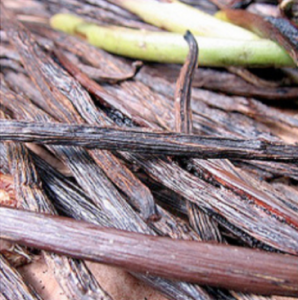
Vanilla hints are present in many applications: food, cosmetics, perfumes, cleaning products, etc. Traditionally, the vanilla flavour is produced from the vanilla pod whose production areas are limited (Indian Ocean, Indonesia, Polynesia and Mexico). Madagascar alone represents nearly 75% of the global vanilla pod production. The vanilla flavour market is of about 700 million euros but the vanilla extracted from the pod only represents a very low percentage. The chemical synthesis of vanillin dates back to the middle of the 19
thcentury and
more recently, biotechnological processes have been developed:
- The use of enzymes (cellulase, beta-glucosidase) for increasing the extraction yield and the conversion of vanillin precursors in the pods. The application of beta-glucosidase for treating vanilla pods was the subject of a patent published in 2014 by the Givaudan company.
- Microbial fermentation for converting ferulic acid (present notably in rice bran) into vanillin. This is the process used by Solvay to cite an example.
- Yeast fermentation to produce vanillin from glucose as the only carbonaceous substrate (process developed by Evolva).
Biocatalysis to produce specific molecules
Menthol, a key flavour of the confectionary industry, has refreshing properties in its L-(-)-menthol form, the other isomers do not have this particularity. The enantioselective hydrolysis of (D,L) menthyl benzoate by a lipase of
Candida rugosathus enables the obtention of L-(-)-menthol of a purity > 99%.
Conclusion
The biocatalytic processes implemented in the flavour and fragrance industry clearly offer many advantagesrelative to extraction or chemical synthesis methods. On the other hand, their industrialization remains a
major challenge for the sector: how can the need for very specific catalysts often with a low use volume be reconciled with the constraints of industrial players producing enzymes or ferments?
Sources
- Biotechnological routes in flavour industries, Dubal et al., (Advanced Biotech., 2008)
- Flavor and fragrance leaderboard (Perfumer and flavorist, Vol. 39 June 2014, www.PerfumerFlavorist.com)