La bioéconomie brésilienne
 Au Brésil, le développement de la biotechnologie industrielle, potentiellement centrale dans l’économie brésilienne, s’appuie sur deux avantages majeurs du pays : la détention de la plus grande biodiversité de la planète et des coûts de production compétitifs.
Jusqu’à ce jour, les acteurs se sont largement focalisés sur l’exploitation de la biomasse (principalement la canne à sucre) par des technologies et des méthodes avancées, avec une agriculture tropicale amplement industrialisée. Mais les interlocuteurs capables de donner voix aux nécessités de la biotechnologie industrielle, de manière coordonnée vis à vis des pouvoirs publics, faisaient défaut. L´année dernière, l´ABBI (Asociação Brasileira de Biotecnologia Industrial) a été créée dans cet esprit par 12 entreprises dont 3 brésiliennes. Le CTC (Centro de Tecnologia Canaviera), le plus grand centre de recherches au monde sur la canne à sucre, en fait partie. Les investissements pour la production de 140 millions de litres par an d´éthanol 2G, à partir des sous-produits paille et bagasse de canne, ont déjà été réalisés.
Le secteur « sucro-alcoolique » a bénéficié d´une importante aide du BNDES (Banco Nacional do Desenvolvimento Economico e Social) et de la Finep (Financiadora de Estudos e Projetos) qui seraient équivalents à Bpifrance : le Programme d’Aide à l’Innovation a co-financé plusieurs projets, apportant un total proche de 550 millions d´euros. Et le pourcentage d´alcool à la pompe, autorisé en mélange à l´essence, est passé de 25% à 27%.
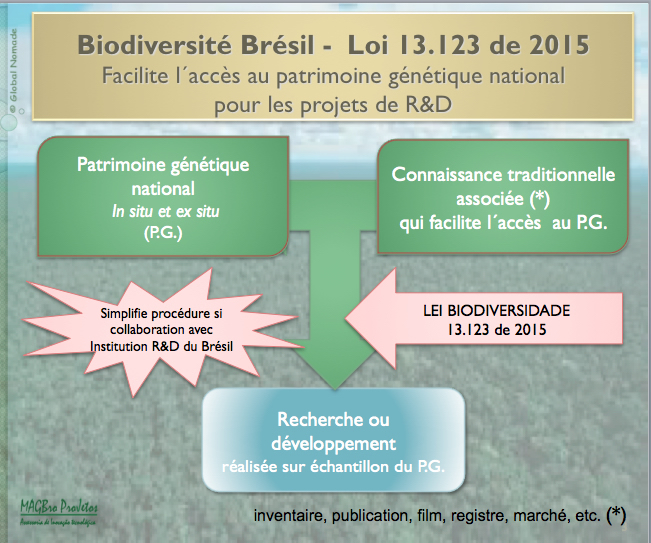
Depuis la mise en application en 2001 de la Convention de la Diversité Biologique (CDB), traité international des Nations Unies qui réglemente le sujet, les procédures pour l´exploitation de la biodiversité étaient considérées lourdes et bureaucratiques. Il y a 3 mois, le gouvernement brésilien a promu une nouvelle loi pour faciliter les recherches et l´exploitation commerciale des espèces natives.
Le développement économique ne pourrait être possible sans un investissement dans l’éducation supérieure du pays. Le gouvernement déploie d’importants efforts en vue d’élargir les compétences et le savoir-faire des étudiants brésiliens, au moyen de programmes de mobilité internationale majeurs tels que Science sans Frontières (Ciencia sem Fronteiras). Entre 2011 et 2015, près de 100000 étudiants et chercheurs brésiliens seront formés dans des laboratoires (publics et privés) étrangers figurant parmi les plus prestigieux au monde. Le programme a été renouvelé avec 100000 bourses de plus d’ici 2018.
Références :
- Bioeconomia : oportunidades, obstáculos e agenda. – Brasília : CNI, 2014. 81 p. : il. –
(Propostas da indústria eleições 2014 ; v. 35) Confederação Nacional da Indústria. - http://www.abbi.org.br
- http://www.canaonline.com.br/conteudo/biotecnologia-industrial-se-consolida-como-setor-estrategico-no-brasil.html
- http://www.cienciasemfronteiras.gov.br/web/csf-eng
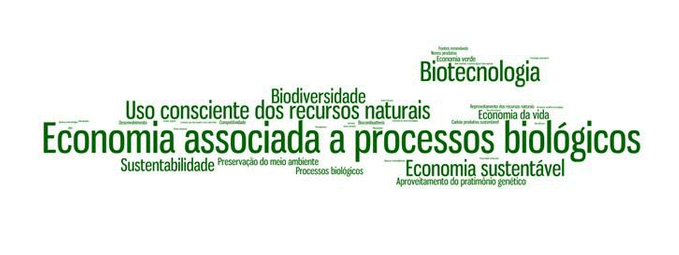
The brazilian bioeconomy
In Brazil, the development of industrial biotechnology, which is potentially central in the Brazilian economy, is based on two major advantages of the country: the holding of the planet’s greatest biodiversity and competitive production costs.
To date, the players have largely focused on the exploitation of the biomass (mainly sugar cane) by advanced technologies and methods, with an extensively industrialized tropical agriculture. But interlocutors capable of giving a voice to the necessities of industrial biotechnology, in a coordinated manner vis à vis the public authorities, were lacking. Last year, the ABBI (Asociação Brasileira de Biotecnologia Industrial) was created in this spirit by 12 companies, including 3 Brazilian ones. The CTC (Centro de Tecnologia Canaviera), the world’s largest research centre on sugar cane, is one of them. Investments for the production of 140 million litres per year of 2G ethanol, from the by-products straw and cane bagasse, have already been made.
The sugar-alcohol sector benefited from a substantial support from the BNDES (Banco Nacional do Desenvolvimento Economico e Social) and the Finep (Financiadora de Estudos e Projetos) which are equivalent to Bpifrance: the Innovation Assistance Programme co-financed several projects, bringing a total of nearly 550 million euros. The percentage of alcohol at the pump, authorized as a blending component in gasoline, increased from 25% to 27%.
Since the enforcement in 2001 of the Convention on Biological Diversity (CBD), the United Nations international treaty which regulates the subject, the procedures for the exploitation of biodiversity were considered cumbersome and bureaucratic. Three months ago, the Brazilian government promoted a new law to facilitate research and commercial exploitation of native species.
Economic development could not be possible without an investment in the country’s higher education. The government is making substantial efforts to broaden the competences and know-how of Brazilian students, by means of major programmes for international mobility such as Science without Frontiers (Ciencia sem Fronteiras). Between 2011 and 2015, nearly 100000 Brazilian students and researchers were trained in foreign laboratories (public and private) which are among the most prestigious in the world. The programme has been renewed with 100000 more scholarships by 2018.
References :
- Bioeconomia : oportunidades, obstáculos e agenda. – Brasília : CNI, 2014. 81 p. : il. –
(Propostas da indústria eleições 2014 ; v. 35) Confederação Nacional da Indústria. - http://www.abbi.org.br
- http://www.canaonline.com.br/conteudo/biotecnologia-industrial-se-consolida-como-setor-estrategico-no-brasil.html
- http://www.cienciasemfronteiras.gov.br/web/csf-eng
Contact : Muriel Brossard MAGBro Projets, murielbross ard@gmail.com, http://fr.linkedin.com/in/murielbrossard